Textiles · Uttar Pradesh · 5 min read
The Needle and the City: Inside Lucknow's Chikankari
Four hundred years. Countless hands. One stitch at a time.
Four hundred years. Countless hands. One stitch at a time.
Before the city wakes, the needle is already moving. In a courtyard off Chowk — the old commercial heart of Lucknow, where merchants once sold silks to Nawabs — a woman sits cross-legged on a reed mat, a length of white muslin stretched across her lap. The light is barely enough. It doesn't matter. Her fingers have memorised the path of every stitch. She is making a flower that no loom could ever produce.
Chikankari is Lucknow's most intimate art form. Not a painting, not a sculpture — a conversation between a woman and a piece of cloth, conducted entirely through the eye of a needle. The word itself is Persian, carried into the subcontinent through the court culture of the Mughals. Legend attributes its introduction to Nur Jahan, Empress of Mughal India, who is said to have gifted the technique to the women of Awadh as a means of livelihood. Whether the story is true or embellished, it captures something essential: Chikankari was always meant to be a gift.
"Every piece takes weeks. No two are alike. That is not inefficiency — that is the entire point."
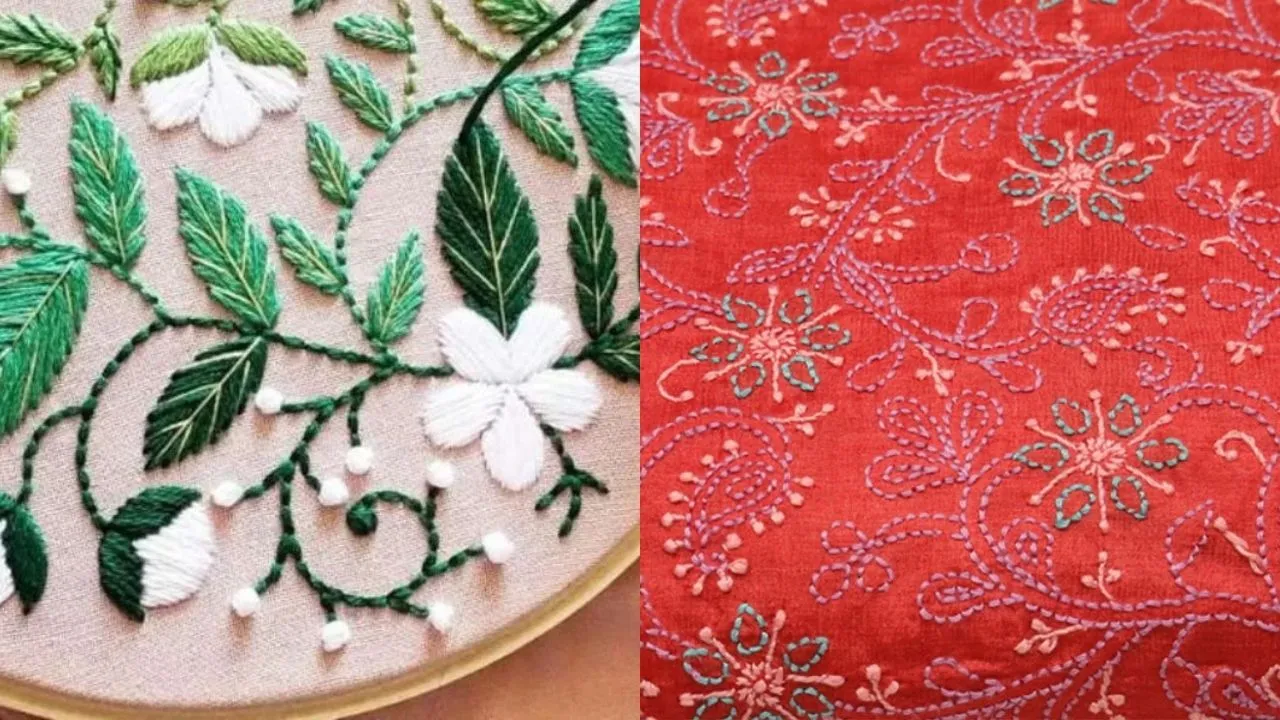
There are thirty-two distinct stitches in traditional Chikankari, each with its own name, its own character, its own appropriate use. Tepchi for the long running stitch that forms the skeleton of the design. Murri for the tiny raised knots that mimic pearls. Jaali for the impossibly fine lattice-work, where threads are pulled apart to create a net of negative space within the fabric itself. A skilled artisan might spend three weeks completing a single jaali panel on a fine kurta. The result, held up to light, is something between textile and architecture.
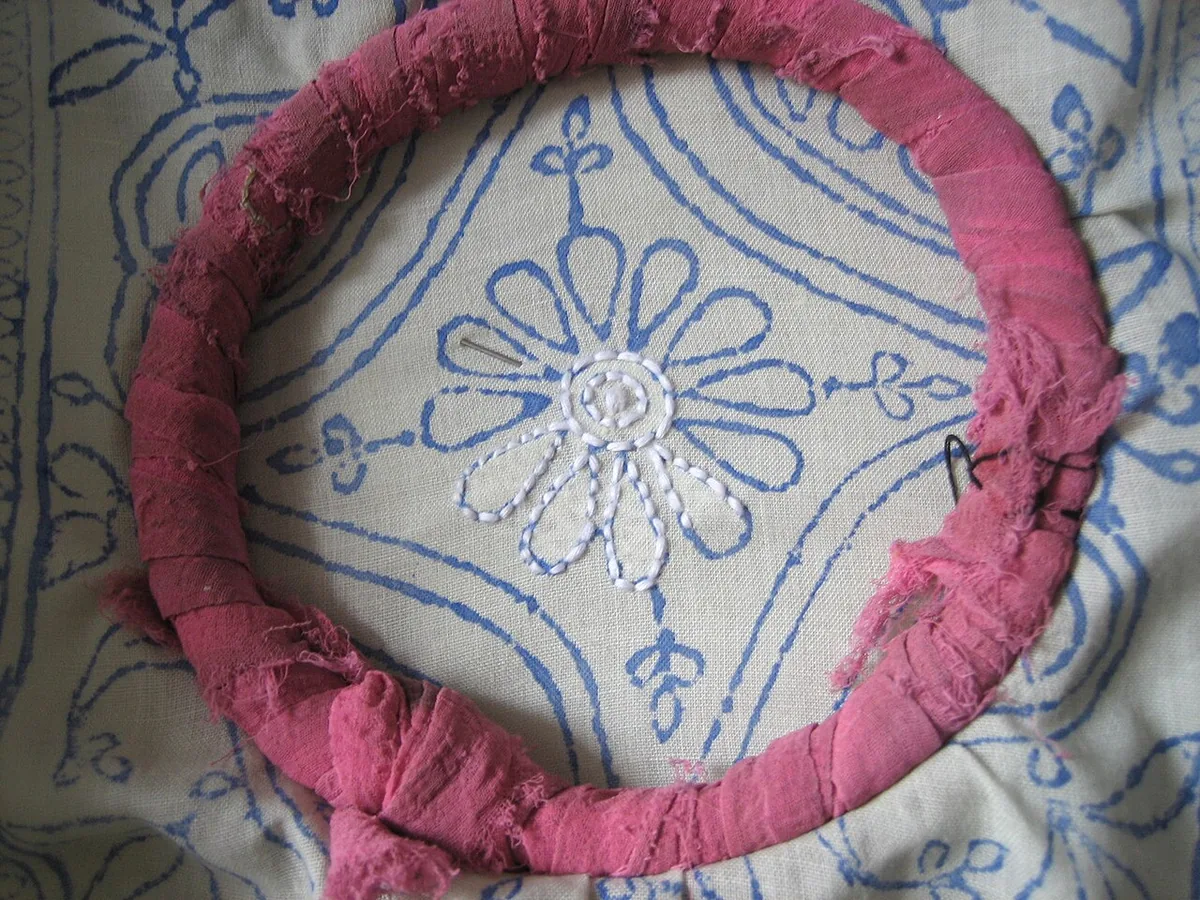
Chikankari from Lucknow — thirty-two distinct stitches, each with its own name and character. Image: Wikimedia Commons.
What makes Chikankari singular among India's craft traditions is its restraint. At its most classical, it is white thread on white cloth — an exercise in subtlety so extreme that the uninitiated might walk past it without noticing the thousands of hours embedded in the fabric. It is a craft that does not announce itself. It waits to be discovered. In the language of luxury, this is the highest register: the confidence of those who need not shout.
The geography of the craft is precise. Lucknow — not Delhi, not Jaipur, not anywhere else. The city's particular light, its Nawabi culture of refinement, its history of courtly patronage, all shaped an aesthetic that cannot be replicated elsewhere. When the Nawabs of Awadh lost political power in 1856, the art could have died with their courts. Instead it moved into the homes of ordinary Lucknow women, who carried it forward not as nostalgia, but as income — and in doing so, ensured its survival into the present day.
"Chikankari is not a craft that announces itself. It waits to be discovered — and that patience is its luxury."
Today, an estimated two hundred and fifty thousand artisans practice Chikankari across Lucknow and its surrounding districts — the vast majority of them women working from home. The craft carries a Geographical Indication tag, meaning no piece made outside this region can legally bear its name. And yet the market is flooded with machine-embroidered imitations, printed approximations, screen-printed shadows of the real thing sold to tourists who cannot tell the difference.
Those who know, know. They hold a garment to the light. They look at the reverse side — in authentic Chikankari, the back of the work reveals the artisan's intelligence; the stitches are nearly as refined as the front. They look at the regularity of the knots, the tension of the threads, the way the jaali breathes. The difference between machine and hand is the difference between a photograph of a garden and the garden itself.
At Morassa, we source Chikankari directly from master karigars in Lucknow's old city — the same families who have been practicing the craft for three and four generations. Each piece we bring to your home has passed through hands that have spent decades learning the language of the needle. It is not decor. It is biography.
Be among the first to own a piece of Chikankari, curated directly from the artisans of Lucknow.
Join the Waitlist